International Women's Day 2026: Women's rights must be consistently strengthened
On International Women's Day, Volt Luxembourg took part in the feminist march organised by JIF (Journée Internationale des Femmes) on 8 March. Together with more than a thousand committed people, we marched through the streets to send a clear message: women's rights are human rights and must be consistently protected and further expanded!
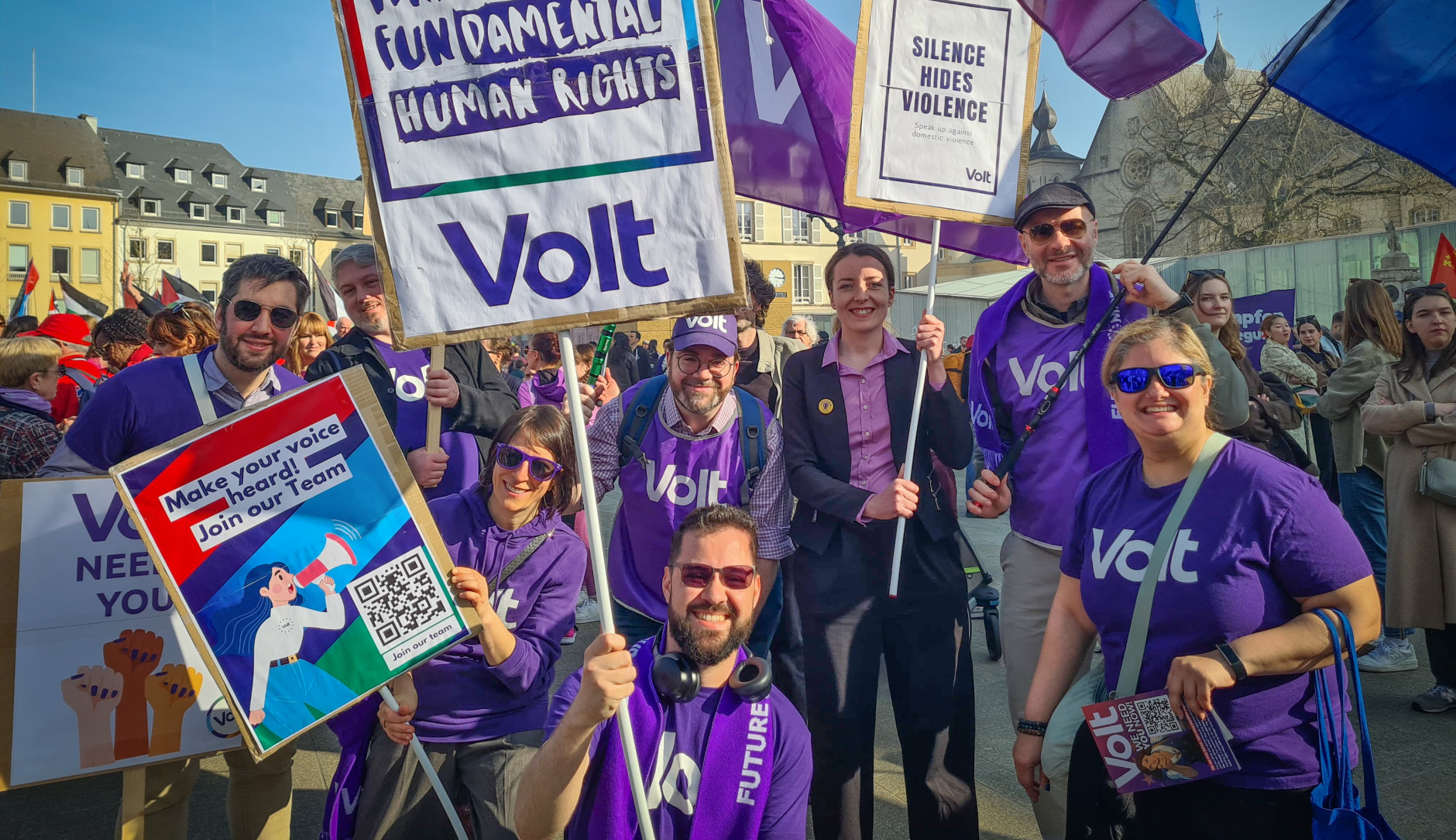
Luxembourg has made important progress in recent years. In particular, the recent constitutional amendment strengthening the right to abortion is a significant step towards women's self-determination. This right must remain permanently protected, and we welcome this change.
At the same time, however, we must not stop there. The JIF has formulated clear political demands. Many of these demands coincide with Volt's values and political goals. In particular, we support measures for a fairer and more inclusive health and social system, as well as for greater self-determination over one's own body.
That is why our demands include, among other things:
Universal and unconditional access to healthcare for all people living in Luxembourg – regardless of administrative status, income or insurance status. Health must not be a market commodity, but must be organised as a public good.
The expansion of a solidarity-based public healthcare system, for example through public health centres, better working conditions in the healthcare sector, the expansion of the tiers payant system and the full coverage of necessary treatments, including psychological care.
The consistent fight against gender-specific medical inequalities, for example through more research into women's health, the recognition of previously underdiagnosed conditions such as endometriosis or PCOS, and the systematic integration of a gender perspective into medical education, research and practice.
Strong sexual and reproductive rights, including safe, free and non-discriminatory access to abortion, free contraceptives and comprehensive affective and sexual education.
The fight against sexist, sexualised and institutional violence as a central public health issue, with better support structures, psychotraumatological care, prevention and training of specialist staff.
An ambitious mental health policy that takes the social causes of stress, burnout and mental strain seriously, for example through better working conditions, stronger prevention, better care and measures against precariousness and poverty.
More social justice and economic equality, including measures to combat poverty, strengthen the public pension system and better recognise the realities of life marked by gender inequalities.
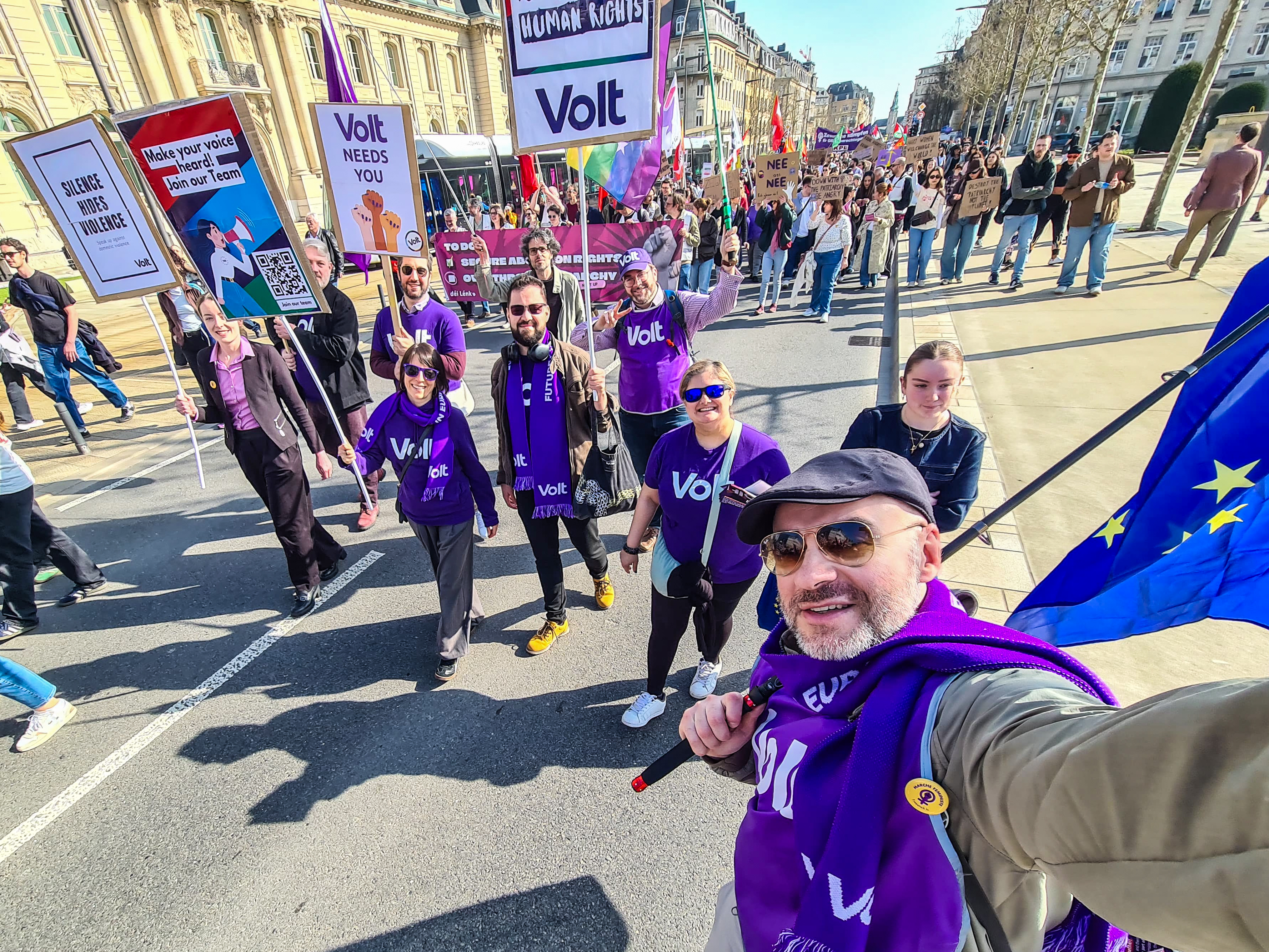 However, we noticed something in the media coverage of the feminist march. So far, none of the major news outlets – neither the Luxemburger Wort, nor RTL or L'Essentiel – has mentioned that political parties also actively participated in the march and protests. None of the published photos show a party flag. Given the large number of photos published from the demonstration, this seems at least like a conscious editorial decision.
This raises questions. After all, the march was about clearly political issues, and the JIF, together with other organisations, formulated concrete demands for politicians. In such a context, it would be quite relevant for the public to see which political actors were present – and which were not.
It is also striking that the two governing parties were nowhere to be seen at the march. In general, most of the parties seemed to be absent. Representatives of the LSAP, déi Lénk, the KPL and déi jonk Gréng were clearly visible, according to our observations. On the other hand, no delegations from the DP, CSV, Pirates or ADR were recognisable.
This raises the question of why the media did not pick up on this aspect. The media have an important responsibility to provide citizens with comprehensive information – including information about which political parties are present at social protests, and which are not. Transparency in this regard is part of a lively democratic debate.
For us, one thing remains clear: equality is not a symbolic demand for one day a year, but a permanent political task. As a progressive European party, we are committed to a society in which all people, regardless of gender or identity, can live freely, safely and equally.
International Women's Day reminds us that progress is possible. Now it is time to push forward.